In the early days of cinema when the extra dimension of sound was an acknowledged requirement, live music in the form of a piano, an organ or even a full orchestra would play in line with moving pictures which illustrated the recognized need of sound.
In 1927 Warner Brothers released the first feature film with a soundtrack-'The Jazz Singer' starring Al Jolson.
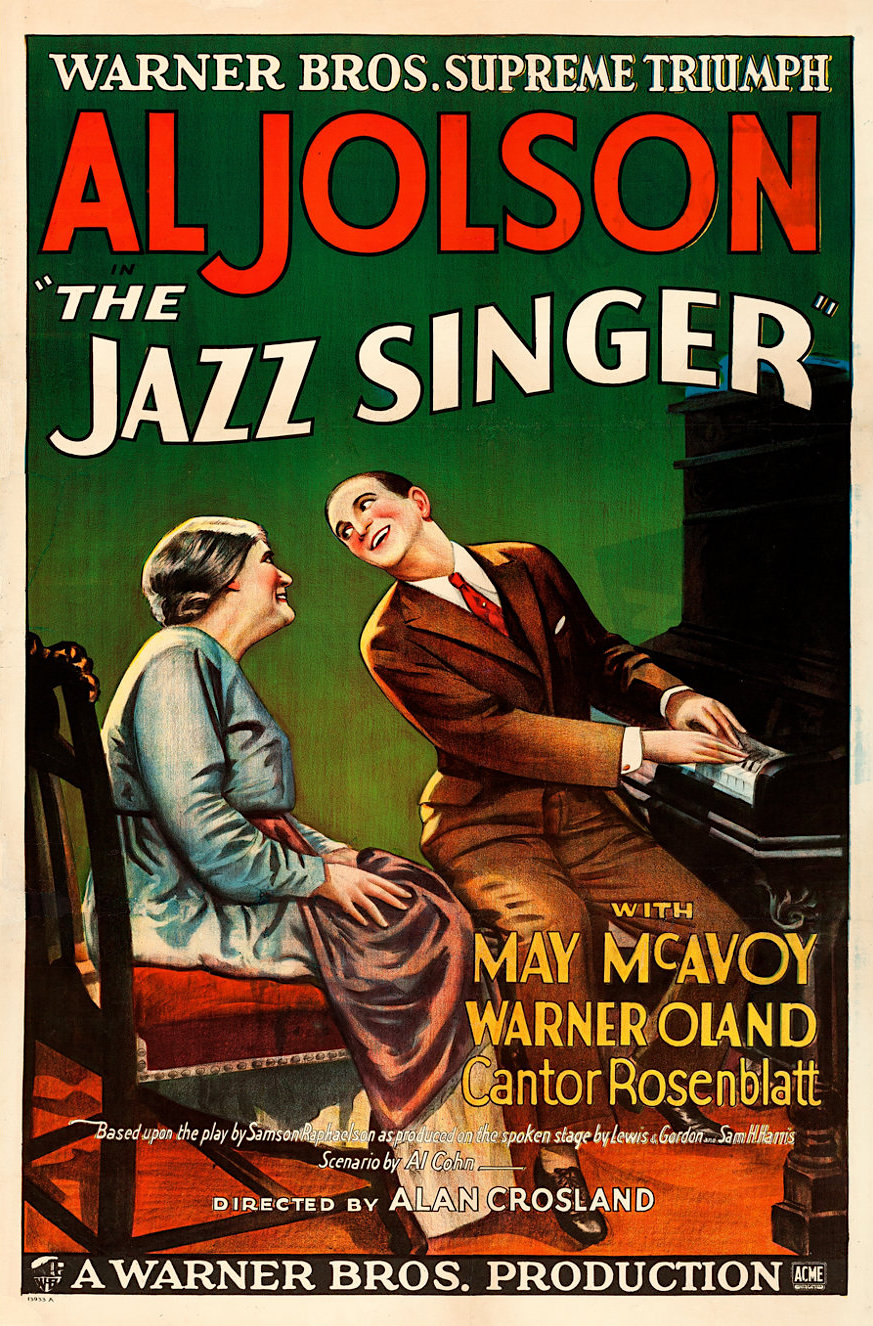
The film, which cost only $23,000 to produce, grossed over $1,000,000. It was also the first film to define the 'Crime' genre. The enthusiasm with which audiences greeted the talkies was so great that by the end of 1929, Hollywood was producing sound films exclusively.

DIEGETIC AND NONDIEGETIC SOUND
Diegetic sound is sound which is part of the film world we are watching. This can be dialogue, music or sound effects which come from a source within the films world. The music in this instance will be from a source in the film which we acknowledge could actually be producing music, for example a CD player or jukebox.
Non-Diegetic Sound is sounds which we as an audience do not recognize as part of the film world such as a voice-over or background music.
SOUND BRIDGES
When sound from one scene continues even though the visual has moved on to the next scene, is known as a sound bridge. This helps to create a smooth transition from one scene to another as the film would seem very disjointed if the sound changes every time the picture on the screen changed. This kind of actions is said to be enhancing the continuity of the film.
PARALLEL AND CONTRAPUNTAL SOUND
Usually when watching a film, the sound being herd normally complements the image that we see on the cinema screen. If we look at children playing on the beach, we'd expect to hear happy voices and light-hearted music-this is known as Parallel Sound. However, when we are watching these happy scenes in the beach but hear the sinister sounding theme signaling the arrival of a shark ;as seen in the film Jaws, this is known as Contrapuntal Sound because the sound we hear does not fit with the image we see on the cinema screen.

No comments:
Post a Comment